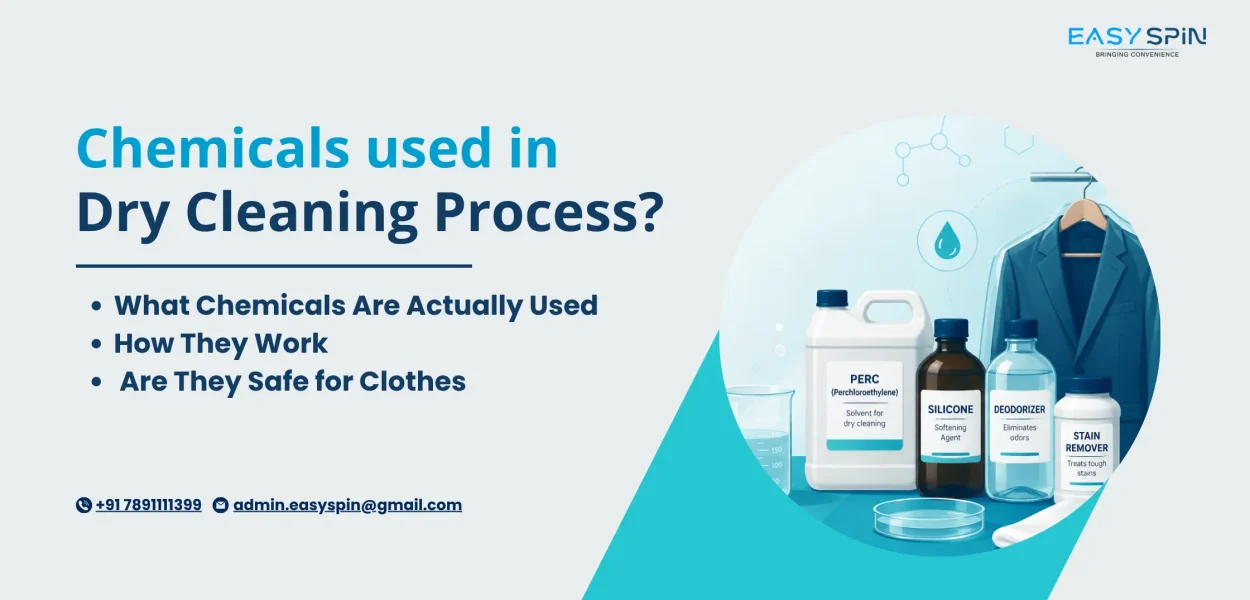
The chemicals used in dry cleaning process are liquid cleaning solvents designed to remove oils, grease, stains, and dirt without using water. Unlike traditional washing, these solvents clean garments while protecting delicate fibers, preserving shape, and reducing shrinkage.
Modern dry cleaners no longer rely on a single chemical. Depending on the garment, stain type, and cleaning technology, a professional dry cleaning service may use hydrocarbon solvents, silicone-based cleaners, liquid carbon dioxide, or specialized spotting agents during the dry cleaning procedure.
What Chemicals Are Actually Used in the Dry Cleaning Process?
Most people assume “dry cleaning chemical” refers to a single liquid. It doesn’t. Modern dry cleaning uses multiple solvents and stain treatment chemicals depending on the fabric and contamination involved. If you’re unfamiliar with the solvent-based cleaning method itself, our guide on what dry cleaning is and how it works explains why professional cleaners use chemicals instead of water for delicate garments.
The most common chemicals used in dry cleaning process are:
- Perchloroethylene (Perc)
- Hydrocarbon solvents
- Silicone-based solvents (D5)
- Liquid Carbon Dioxide (CO₂)
- Professional spotting agents
- Fabric finishing chemicals
Each serves a different purpose in the cloth dry cleaning process.
A wedding lehenga covered in makeup stains may require completely different chemicals than a wool business suit with food stains or body oils.
Perchloroethylene (Perc): Why Was It the Industry Standard for Decades?
Perchloroethylene, commonly called Perc, became the dominant dry cleaning solvent because it removes grease and oil exceptionally well.
For more than 70 years, Perc was the preferred solvent in commercial dry cleaning facilities worldwide because it:
- Dissolves oil-based stains quickly.
- Cleans heavily soiled garments effectively.
- Does not shrink fabrics like water washing can.
- Works well on wool, cotton blends, and structured garments.
Historically, Perc was used by more than 70% of dry cleaners globally.
However, environmental regulations and health concerns have pushed many professional cleaners toward safer alternatives in recent years.
Today, many premium dry cleaners in India have shifted toward hydrocarbon and silicone cleaning systems.
Hydrocarbon Solvents: The Most Common Modern Dry Cleaning Chemical
Hydrocarbon solvents have become one of the most widely used alternatives to Perc in modern dry cleaning facilities.
These petroleum-derived solvents clean more gently and are particularly suitable for delicate garments.
Hydrocarbon cleaning offers several advantages:
- Lower risk of color fading.
- Softer finish after cleaning.
- Reduced stress on fabric fibers.
- Better odor profile.
- Greater safety for embellished garments.
Hydrocarbon cleaning is commonly recommended for:
- Silk sarees
- Designer dresses
- Bridal wear
- Embroidered garments
- Blazers
- Luxury ethnic wear
The cleaning cycle typically takes longer than Perc cleaning, but the additional time often results in better fabric care.
Silicone-Based Solvents and CO₂ Cleaning: Are They Better?
Silicone and liquid CO₂ systems represent the premium end of the dry cleaning industry.
Silicone dry cleaning uses a solvent known as D5 or decamethylcyclopentasiloxane.
This solvent is known for:
- Extremely gentle cleaning action.
- Excellent color protection.
- Minimal shrinkage risk.
- Soft fabric feel after cleaning.
Luxury fashion brands often recommend silicone cleaning for high-value garments.
Liquid carbon dioxide cleaning takes a different approach altogether.
Instead of traditional solvents, the process uses pressurized liquid CO₂ to lift dirt and oils from fabrics.
Benefits include:
- Minimal environmental impact.
- No toxic residues.
- Excellent stain removal.
- Solvent recycling rates above 95%.
The downside is cost.
CO₂ cleaning systems require highly specialized machinery, making them relatively uncommon in India.
What Do These Chemicals Actually Do During the Dry Cleaning Procedure?
The dry cleaning procedure is not simply “washing without water.”
Each chemical performs a very specific job during the cleaning cycle.
Oil Removal
Body oils, grease, cooking stains, and cosmetic products dissolve poorly in water.
Dry cleaning solvents dissolve these contaminants efficiently.
This is why lipstick, foundation, butter, and cooking oil stains often disappear after dry cleaning but survive multiple washes at home.
Dirt Suspension
The solvent lifts dirt particles from fabric fibers and keeps them suspended in the liquid until filtration removes them.
Modern dry cleaning machines continuously filter and recycle solvent throughout the cleaning cycle.
Fabric Protection
Water causes many natural fibers to swell, shrink, or distort.
Dry cleaning solvents avoid this problem entirely.
This protects:
- Wool
- Silk
- Cashmere
- Velvet
- Rayon
- Structured cotton garments
Odor Removal
Professional solvents also remove smoke, food, and body odors that become trapped inside fabric fibers.
How Do These Chemicals Move Through the Cloth Dry Cleaning Process?
The cloth dry cleaning process follows a highly controlled sequence.
Step 1: Garment Inspection
Technicians inspect:
- Fabric composition
- Care labels
- Existing damage
- Missing buttons
- Stain locations
This determines which solvent and cleaning cycle should be used.
Step 2: Stain Treatment
Visible stains receive targeted chemical treatment before machine cleaning begins.
Examples include:
| Stain Type | Treatment Used |
|---|---|
| Coffee | Tannin remover |
| Ink | Solvent-based treatment |
| Grease | Degreasing agent |
| Blood | Protein remover |
| Makeup | Cosmetic solvent |
Step 3: Solvent Cleaning
Garments enter the machine where solvent circulates continuously through the fabric.
A typical cleaning cycle lasts between 8 and 15 minutes depending on soil level and garment type.
Step 4: Solvent Recovery
Modern dry cleaning machines recover and recycle approximately 99% of the solvent used during cleaning.
This significantly reduces chemical waste and environmental impact.
Step 5: Finishing and Pressing
After cleaning, garments are:
- Dried
- Steamed
- Pressed
- Shaped
- Quality checked
This final stage restores the garment’s original appearance.
Are Dry Cleaning Chemicals Safe for Clothes?
Yes. Professional dry cleaning chemicals are specifically designed to protect fabrics that would otherwise be damaged by water washing.
Dry cleaning is often safer than machine washing for:
- Wool suits
- Silk sarees
- Blazers
- Leather jackets
- Bridal wear
- Cashmere garments
Some wool fabrics can shrink by up to 10% after improper washing.
Professional dry cleaning avoids this by eliminating water from the cleaning cycle.
For expensive garments, dry cleaning is usually the safer option.
Are Dry Cleaning Chemicals Safe for Humans and the Environment?
Modern dry cleaning facilities operate using closed-loop systems that recover and recycle solvents rather than releasing them into the environment.
Most modern machines recover between 95% and 99.9% of cleaning solvent during each cycle.
The industry has steadily moved toward:
- Hydrocarbon cleaning
- Silicone cleaning
- CO₂ cleaning
- Low-emission equipment
Consumers who prioritize sustainability can ask their cleaner which solvent technology they use.
Which Clothes Actually Need Dry Cleaning Instead of Washing?
Not every garment requires dry cleaning.
However, certain fabrics perform significantly better when cleaned professionally.
| Garment Type | Recommended Method |
| Wool Suit | Dry Cleaning |
| Silk Saree | Dry Cleaning |
| Blazer | Dry Cleaning |
| Bridal Wear | Dry Cleaning |
| Leather Jacket | Dry Cleaning |
| Cashmere Sweater | Dry Cleaning |
| Cotton T-Shirt | Regular Washing |
| Bedsheets | Regular Washing |
If the care label says “Dry Clean Only,” water washing can permanently damage the fabric.
Dry Cleaning vs Washing: Which Removes Stains Better?
The answer depends on the stain.
| Stain Type | Dry Cleaning | Washing |
| Grease | Excellent | Moderate |
| Makeup | Excellent | Moderate |
| Cooking Oil | Excellent | Poor |
| Sweat | Good | Excellent |
| Mud | Moderate | Excellent |
| Food Stains | Good | Good |
Oil-based stains almost always respond better to dry cleaning solvents than traditional detergents.
What Should You Ask Before Choosing a Dry Cleaner?
Choosing the right cleaner matters almost as much as choosing the right cleaning method.
Before handing over expensive garments, ask:
- Which solvent system do you use?
- Do you separate customer loads?
- Is stain treatment included?
- How are delicate garments handled?
- Do you inspect garments before cleaning?
Professional cleaners should be able to answer these questions confidently.
What This Means for Your Clothes
Most consumers never need to know whether their dry cleaner uses hydrocarbon solvents, silicone cleaning systems, or traditional Perc technology. What matters is whether the cleaning method matches the fabric, construction, and type of stains on the garment.
A cotton T-shirt with sweat stains and everyday dirt responds well to conventional washing. A wool blazer, silk saree, or embroidered lehenga often requires solvent cleaning to preserve shape, texture, and color. Using the wrong cleaning method can permanently damage fibers long before the garment reaches the end of its natural lifespan.
This is why garment manufacturers include care instructions directly on clothing labels. Textile care symbols are standardized internationally under the ISO 3758 textile care labeling standard, helping consumers identify when a garment should be washed, professionally cleaned, or kept away from water entirely.
For consumers who are unsure whether an item should be washed, steamed, or dry cleaned, professional garment care advice is often safer and cheaper than replacing an expensive outfit after a failed wash cycle. Services available through Easy Spin help simplify that decision by connecting customers with professional laundry and dry cleaning providers across multiple Indian cities.
Frequently Asked Questions
Which chemical is most commonly used in dry cleaning?
Perchloroethylene was historically the most widely used solvent in dry cleaning. Today, hydrocarbon solvents have become one of the most common alternatives in modern facilities.
Does dry cleaning use water?
No. The dry cleaning process uses liquid solvents rather than water for cleaning garments. Steam may still be used during pressing and finishing.
Why is it called dry cleaning if liquid chemicals are used?
The process is called dry cleaning because it avoids water-based washing. The garments are cleaned using liquid solvents instead of water and detergent.
Are dry cleaning chemicals safe for silk and wool?
Yes. Professional dry cleaning chemicals are specifically designed for delicate fabrics such as silk, wool, velvet, and cashmere.
Can dry cleaning remove oil stains better than washing?
Yes. Oil and grease dissolve much more effectively in dry cleaning solvents than in water, making dry cleaning the preferred option for these stains.
Understanding the chemicals used in dry cleaning process helps consumers make better fabric care decisions and choose the right service for every garment.