You drop off a jacket on Monday. By Thursday it’s back, clean and pressed, with no water anywhere near it. So how does that work? Dry cleaning feels like a mystery to most people. It’s actually a simple process with a few careful steps. Let’s walk through each one.
What Is Dry Cleaning Process?
Dry cleaning is a way of cleaning clothes without water. A liquid solvent does the job instead. It breaks down oil, grease and dirt while being gentle on the fabric. If you’re new to the idea, our guide on what is dry cleaning covers the basics in detail. Here, we’ll focus on what happens to your clothes once they leave your hands.
Why Not Just Use Water?
Water is great for cotton and denim. But it can be rough on delicate fabrics. Wool can shrink. Silk can lose its shine. Some dyes bleed, and structured items like blazers can lose their shape. Solvents clean without making fibres swell. That’s why your best clothes often carry a “Dry Clean Only” label.
Step 1: Inspection and Tagging
Every garment gets checked at the start. The cleaner looks for stains, loose buttons, torn seams and anything left in the pockets. They also read the care label to see what the fabric can handle. Each item then gets a tag or barcode. This keeps your clothes from getting mixed up with someone else’s.
Tip: tell the cleaner what caused a stain. A wine spill and an oil mark need different treatment.
Step 2: Sorting
Next, clothes are sorted by fabric type, colour and how dirty they are. Dark velvet shouldn’t share a load with a white shirt. Good sorting protects colours and helps each batch get the right cleaning method.
Step 3: Pre-Treating Stains
Before the machine, stains get treated by hand. The cleaner picks a stain remover that suits the mark and the fabric. Grease, ink, sweat and food stains all behave differently.
This step takes skill. The wrong product can leave a ring or weaken the fibres. Delicate buttons or trims are sometimes covered or removed so the solvent doesn’t harm them.
Step 4: The Cleaning Cycle
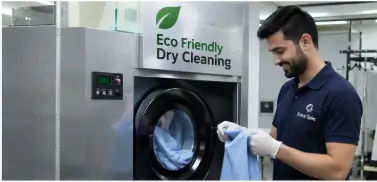
Now the garments go into the machine. It looks like a large front-loading washer, but it uses solvent instead of water.
The drum fills with solvent and tumbles the clothes slowly. The solvent pulls out grease and dirt. A filter keeps removing loose particles, so the dirt doesn’t settle back onto your clothes.
Not every cleaner uses the same solvent. Some use perc, some use hydrocarbon, and others use silicone-based or water-based options. Each has its own strengths. If you’re curious, our breakdown of the types of dry cleaning methods explains how they differ and when each one makes sense.
Step 5: Extraction and Drying
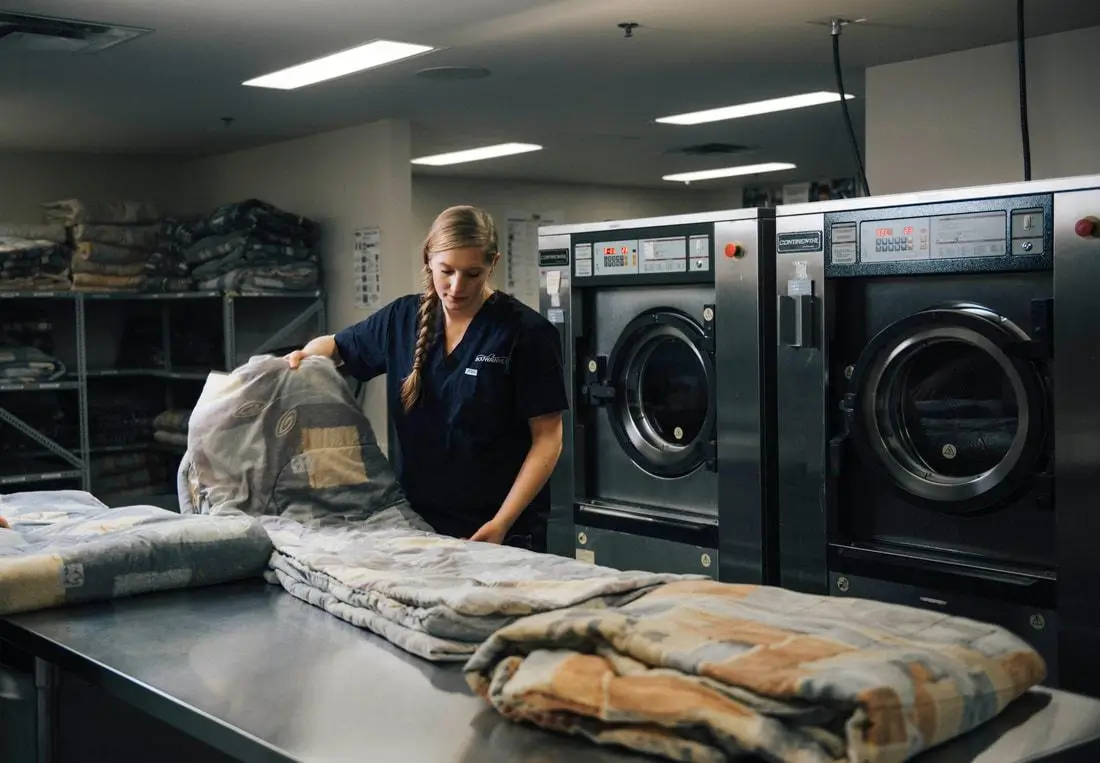
When the cycle ends, the solvent drains away. The machine spins the clothes to push out what’s left. Then warm air moves through the drum and dries the garments.
Many modern machines recover and reuse the solvent. That cuts waste and keeps the air cleaner. A well-dried garment shouldn’t smell of chemicals when it comes back.
Step 6: Checking for Leftover Stains
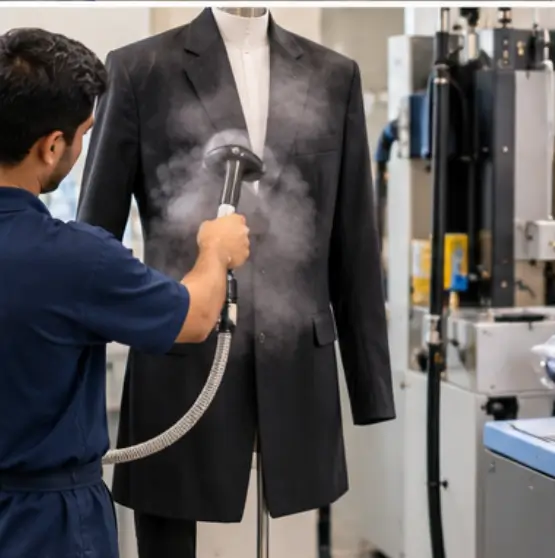
Some stains don’t leave in the first round. So after drying, each item gets a second look under bright light. Stubborn spots get extra treatment with steam, brushes or targeted removers.
Be realistic here. Old stains, dye marks and some sweat stains may fade but not vanish completely. A good cleaner will tell you that upfront.
Step 7: Pressing and Finishing
This is the part you notice most. Pressing brings back the crisp, fresh look.
- Shirts and trousers go through steam presses for sharp creases.
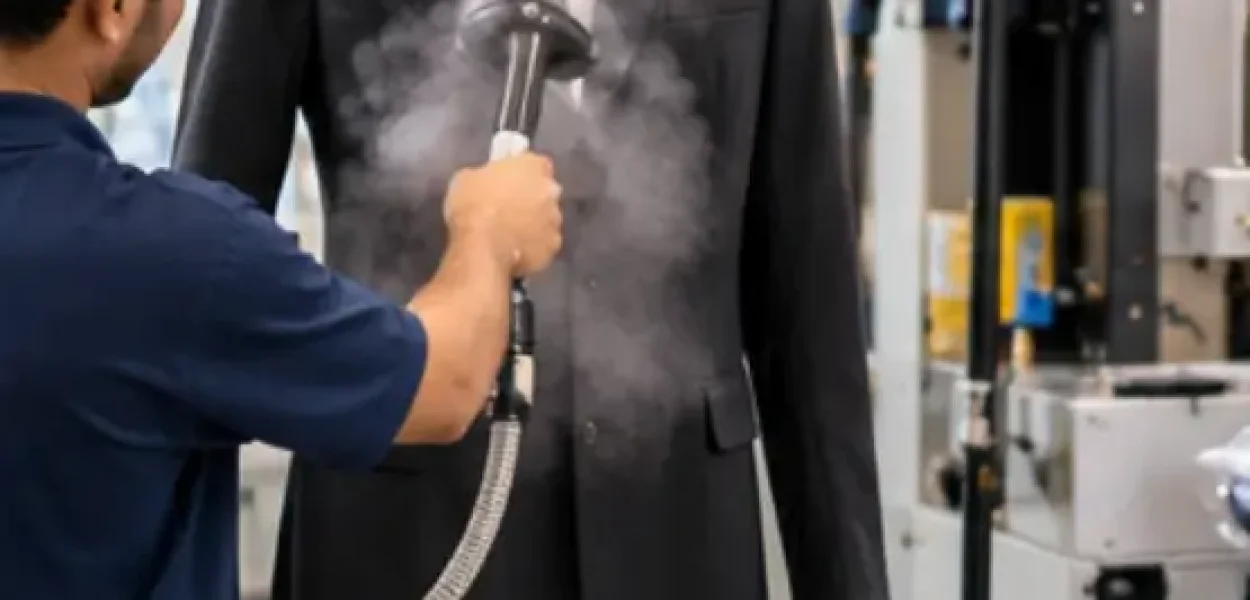
- Suits and jackets are shaped on forms to protect the shoulders and lapels.
- Sarees, lehengas and silk outfits get gentle hand finishing so the fabric doesn’t get crushed or shiny.
Step 8: Final Check and Packing
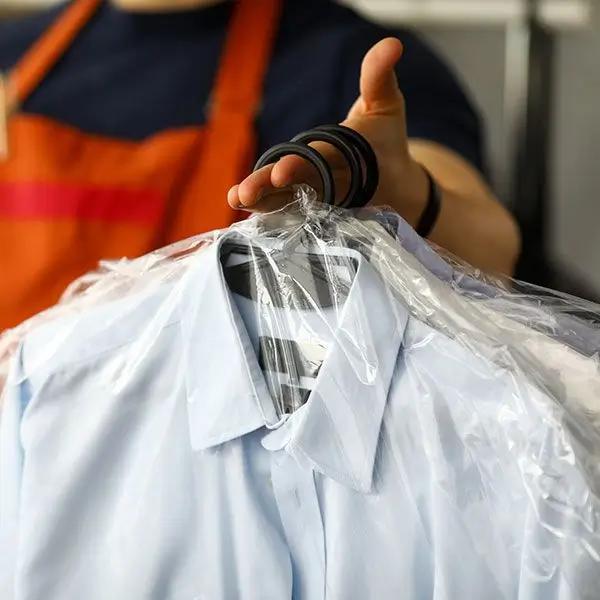
Before packing, the staff check every item once more. They look for missing buttons, marks and uneven pressing. Then the clothes are covered in protective bags and matched to the right customer using the original tag.

How Long Does It Take?
Most dry cleaning takes 2 to 3 days. Heavier items like winter coats, bridal wear and embroidered outfits can take longer. They need extra care at almost every step.
Which type of Clothes Need Dry Cleaning?
Not everything does. You’ll get the most value from using it on:
- Suits, blazers and formal wear
- Silk, wool, velvet and cashmere
- Sarees, lehengas and sherwanis
- Curtains and heavy upholstery covers
- Anything labelled “Dry Clean Only”
Your regular cotton tees and jeans can stay with the normal wash.
Small Habits That Help
- Act fast on stains. Fresh stains come out far more easily.
- Don’t scrub at home. Rubbing can push the stain deeper.
- Empty your pockets. Pens and tissues cause more trouble than you’d think.
- Read the care label. It’s there for a reason.
- Let clothes breathe. Take off the plastic cover if you’re storing them for long.
Simple and Stress-Free Laundry Service
Taking clothes to a shop, waiting, then going back to collect them eats up time. That’s why more people now book laundry service in India from home. Pickup and delivery come to your door, and your clothes are handled by trained professionals.
If you like having everything in one place, a laundry app in India makes it even easier. You can schedule a pickup, track your order and get your clothes back without leaving the house. Easy Spin connects you with verified local service partners who handle the cleaning.
Final Thoughts
Dry cleaning isn’t magic. It’s a careful routine of inspecting, treating, cleaning, drying and pressing, with each step protecting the fabric. Once you know how it works, it’s easier to trust it with your favourite outfits and to know what a good result looks like.