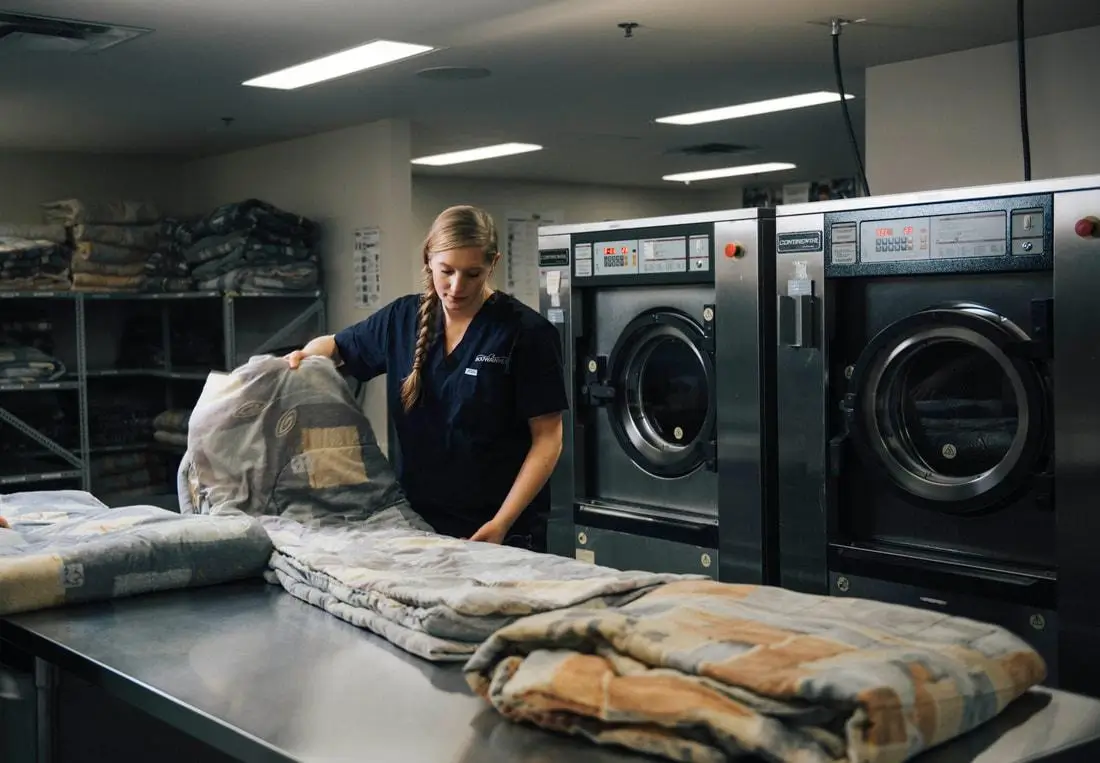

A few years ago, “eco-friendly dry cleaning” was a niche term you’d mostly hear from boutique cleaners in South Delhi or South Bombay. Today, it’s showing up on signboards of neighbourhood laundromats in Tier-2 cities too — often right next to the same old perc machine that’s been running since the shop opened. But here’s the catch: most people still don’t actually know how does eco-friendly dry cleaning work, which makes it hard to tell whether a shop is genuinely using greener methods or just adding the word “eco” to their branding.
This matters more in India than people realise. Between pollution-heavy city air settling into fabric fibres, the heavy use of dry cleaning for silk sarees, sherwanis, and wedding garments, and monsoon humidity that makes proper finishing critical, the method used to clean your clothes has a bigger real-world impact here than in many other markets. This guide breaks down the actual science, the real cost difference, how to spot genuine green cleaning, and whether it makes sense for your wardrobe — without the usual sales pitch.
What “Eco-Friendly” Actually Means in Dry Cleaning
Most dry cleaning — the kind that’s been standard since the 1930s — uses a solvent called perchloroethylene, or “perc” for short. It’s effective at removing oily stains and works on almost any fabric, which is why it became the industry default.
The problem is that perc is classified as a likely human carcinogen by some environmental agencies, and it doesn’t break down easily once it enters soil or water. Workers who handle it regularly face the highest exposure, but residue can also remain on clothes immediately after cleaning — which is part of why dry-cleaned garments often have that distinct chemical smell.
There’s also a less-discussed angle that’s particularly relevant in Indian cities: garments worn outdoors in high-pollution areas already carry fine particulate matter embedded in the weave, especially in wool and silk. Traditional perc cleaning is reasonably good at lifting surface grime but doesn’t always fully release particulates trapped deep in tightly-woven fabrics like silk sarees. Wet cleaning, with its longer and more controlled agitation cycles, tends to do a more thorough job here — something we’ve noticed consistently with heavier silk pieces that come in after Delhi or Kanpur’s winter smog months.
Eco-friendly dry cleaning refers to processes that replace perc with alternatives that don’t carry the same long-term environmental or health concerns. The three most common methods are:
Liquid CO2 Cleaning
This method pressurizes carbon dioxide — yes, the same gas you exhale — until it behaves like a liquid solvent. Combined with a small amount of detergent, it lifts dirt and oils from fabric. Once cleaning is done, the CO2 simply returns to a gas and can be recaptured and reused, leaving essentially no chemical residue on the garment.
Professional Wet Cleaning
Despite the name, this isn’t your washing machine at home. Professional wet cleaning uses computer-controlled machines that monitor water temperature, agitation, and spin speed with far more precision than a household machine, paired with biodegradable, fabric-specific detergents. It’s particularly effective for wool, silk, and structured garments that would normally be labeled “dry clean only.”
This is also the method that tends to work best for heavy embroidered sherwanis and bridal lehengas — garments that often combine multiple fabric types (silk base, zari work, net dupatta) in a single piece. A skilled wet-cleaning operator will treat each section differently within the same cycle, something that’s much harder to do with solvent-based methods where the whole garment sits in the same chemical bath.
Silicone-Based Cleaning (Green Earth / D5)
This method uses a liquid silicone solvent that’s chemically similar to ingredients found in some cosmetics and skincare products. It’s gentle on fabric, doesn’t leave a strong odor, and biodegrades much faster than perc when released into the environment.
How Does Eco-Friendly Dry Cleaning Work in Practice?
Here’s where things get practical. If you drop off a wool blazer at a cleaner using wet cleaning, the process generally looks like this:
- Inspection – The garment is checked for stains, loose buttons, and fabric type to determine water temperature and cycle settings.
- Pre-treatment – Stains are treated individually with eco-safe spot removers before the main cycle.
- Cleaning cycle – The garment goes through a controlled wash using biodegradable detergent, with settings calibrated specifically for that fabric.
- Finishing – Because wet-cleaned garments can shrink slightly more than perc-cleaned ones if not handled carefully, finishing (steaming, blocking, pressing) is done by hand to restore shape.
This last step — finishing — is actually where a lot of “eco-friendly” cleaners cut corners. The cleaning chemistry might be green, but if the finishing isn’t done properly, garments can come back slightly misshapen, which is one of the most common complaints people have after trying a green cleaner for the first time.
This is especially noticeable with office formals — a crisp shirt collar or a blazer’s shoulder structure depends entirely on how it’s pressed after cleaning, not just what it’s cleaned with. If you’re curious about how finishing technique affects garment shape more broadly, our guide on steam ironing vs dry ironing covers this in more depth — the same principles apply to the finishing stage of eco-friendly cleaning.
Is Eco-Friendly Dry Cleaning More Expensive — And Why?
Yes, usually — but the reason matters.
CO2 and silicone-based cleaning require specialized machines that can cost significantly more than standard perc machines, and these machines also need more frequent solvent top-ups in early years. Wet cleaning machines are closer in price to commercial washers but require staff trained specifically in fabric-by-fabric settings, which adds labour cost.
In most Indian cities, the price difference between standard and eco-friendly dry cleaning for a single garment typically ranges from ₹20 to ₹80 extra, depending on the garment type and the method used. For a full wardrobe refresh — say, 10-15 garments a month — that’s roughly an extra ₹300-800 monthly.
Whether that’s “worth it” really comes down to three factors:
- Garment value – The cost difference matters less on a ₹15,000 silk Banarasi saree or a heavily worked sherwani than on a ₹400 cotton shirt or a school uniform that gets washed weekly.
- Skin sensitivity – If anyone in your household has eczema, asthma, or chemical sensitivities, the reduced residue from eco-friendly methods can make a noticeable difference — this is particularly relevant for school uniforms and daily-wear items that sit directly against a child’s skin for hours.
- Frequency of cleaning – If you dry clean occasionally (say, for weddings and festive wear once every few months), the cost gap is negligible. If you’re a frequent dry-cleaning user — formal office wear every week, for instance — it adds up.
How to Spot a Genuinely Eco-Friendly Dry Cleaner
This is the part most articles skip, and it’s arguably the most useful.
Ask what specific method they use — not just “are you eco-friendly?” A genuine green cleaner will immediately say “CO2,” “wet cleaning,” or “GreenEarth/silicone” without hesitation. If the answer is vague (“we use safe chemicals” or “all natural products”), that’s a red flag — perc itself is sometimes marketed using softer language.
Check the smell test, but understand its limits Eco-friendly cleaned clothes generally have little to no chemical smell. However, absence of smell alone isn’t proof — some hybrid cleaners use perc but with better ventilation and finishing, which reduces odor without changing the actual solvent.
Look for third-party certifications Labels like “GreenEarth Certified” or “Certified Wet Cleaner” indicate the business has been independently verified, not just self-described. These certifications are still relatively rare in India, so don’t be discouraged if a good local cleaner doesn’t have one — but if they claim to have one, it’s reasonable to ask to see it. For a broader checklist on vetting any dry cleaner — not just eco-friendly claims — see our guide on how to choose a dry cleaning service.
Notice how they handle delicate fabrics Ask how they’d handle a specific item — say, a beaded saree or a leather jacket. A cleaner experienced in eco-friendly methods will usually have a clear, specific answer about which method suits which fabric, because not all green methods work equally well on all materials. CO2 cleaning, for instance, isn’t ideal for heavily beaded or sequinned fabrics, while wet cleaning handles them better with the right technique.
During monsoon months, this question becomes even more important. Wool blazers and jackets that have absorbed humidity need a drying and finishing process that fully removes moisture from within the fibre, not just the surface — otherwise they can develop a musty smell within days, even after cleaning. An experienced eco-friendly cleaner will usually mention this proactively, often suggesting a slightly longer drying cycle during humid months without being asked.
Eco-Friendly vs Traditional Dry Cleaning: A Practical Comparison
| Factor | Traditional (Perc) | Eco-Friendly (CO2/Wet/Silicone) |
|---|---|---|
| Best for | Heavily soiled, oil-based stains | Delicate fabrics, sensitive skin |
| Residue/Smell | Noticeable chemical smell common | Minimal to none |
| Garment shrinkage risk | Lower (with perc) | Slightly higher with wet cleaning if finishing is rushed |
| Equipment availability | Widely available | Limited, mostly metro/Tier-1 cities |
| Typical cost difference | Baseline | +₹20 to ₹80 per garment |
| Environmental impact | Higher (VOC emissions, disposal concerns) | Lower, especially with CO2 recapture |
When Eco-Friendly Dry Cleaning Might NOT Be the Right Choice
To keep this balanced: eco-friendly methods aren’t universally better for every situation.
- Heavy grease or oil stains (common on chef uniforms, mechanic workwear) are sometimes still handled more effectively by traditional solvents, since perc has stronger solvency for certain oil-based compounds.
- Availability is a real constraint — many smaller towns simply don’t have CO2 or wet-cleaning equipment yet, so “eco-friendly” might mean a 1-2 day longer turnaround if the garment needs to be sent to a centralized facility.
- Very old or fragile vintage garments sometimes have specific care requirements that a cleaner familiar with traditional methods may handle more predictably, simply due to more experience with that fabric type over decades.
A good cleaner — eco-friendly or not — should be honest about these trade-offs rather than claiming one method is perfect for everything.
Caring for Clothes Between Eco-Friendly Cleanings
Since green cleaning is sometimes slightly gentler (and occasionally pricier), spacing out cleanings sensibly helps:
- Air garments on a hanger for a few hours after wearing, away from direct sunlight, before storing — this alone reduces odor buildup significantly, and matters even more during humid monsoon weeks when moisture lingers in fabric longer.
- Spot-clean small marks immediately using a clean, slightly damp cloth and gentle blotting (never rubbing, which can spread the stain into fibers). If a colour-run mishap happens during a regular wash, our guide on removing colour run stains from clothes has step-by-step fixes.
- Store wool and silk in breathable cotton garment bags, not plastic — plastic traps moisture, which can lead to mildew over time, especially in humid coastal cities like Mumbai or Chennai.
- Rotate between at least 2-3 work outfits rather than wearing and cleaning the same one repeatedly — this reduces fiber stress and extends the time between cleanings. For everyday cottons and uniforms that don’t need dry cleaning at all, regular wash and fold laundry with proper sorting often does more for garment longevity than people expect.
The Bigger Picture: Where Eco-Friendly Cleaning Is Headed
The dry cleaning industry in India is at an interesting inflection point. CO2 and wet-cleaning equipment costs have dropped over the past several years as more manufacturers enter the space, which means adoption is gradually moving beyond just premium boutique cleaners.
At the same time, regulatory attention on perc usage has increased in several countries, and it’s likely India will see similar movement over the next 5-10 years — meaning eco-friendly methods may shift from “premium option” to “standard practice” faster than most people expect.
For now, the most practical approach is what this guide has focused on: understanding how eco-friendly dry cleaning works, knowing what questions to ask, and making an informed choice based on your specific garments and needs — rather than choosing based on marketing labels alone.
Conclusion
So, are eco-friendly dry cleaning services worth it? For most people — especially those with sensitive skin, delicate fabrics like silk and wool, or a preference for reducing chemical exposure — yes, the modest extra cost is generally justified. But as this guide has tried to show, “eco-friendly” isn’t a magic word; it’s a specific set of processes (CO2 cleaning, professional wet cleaning, or silicone-based cleaning), each suited to different garments and situations, with real trade-offs around availability and turnaround time.
The most useful thing you can take away from understanding how eco-friendly dry cleaning works isn’t a single yes/no answer — it’s knowing what to ask. Which method does this cleaner actually use? How do they handle this specific fabric? What happens during finishing? Those questions will tell you more about quality than any “eco” label on a signboard ever will, whether you’re sending in a daily-wear shirt or a once-a-year wedding outfit. If you’d like to explore related care topics, our guides on choosing a dry cleaning service and professional dry cleaning services cover the practical side of this in more detail.
Frequently Asked Questions
Is eco-friendly dry cleaning actually better for sensitive skin?
Yes, in most cases. Since eco-friendly methods like CO2 and silicone-based cleaning leave minimal solvent residue compared to traditional perc cleaning, people with eczema, allergies, or chemical sensitivities often notice less irritation. However, results can vary by individual, so if you have severe skin conditions, it’s worth doing a small test with one garment first.
How does eco-friendly dry cleaning work for delicate fabrics like silk and wool?
Eco-friendly dry cleaning generally works very well for delicate fabrics, particularly through professional wet cleaning, which uses precisely controlled water temperature and gentle, fabric-specific detergents. Silicone-based cleaning is also well-suited to silk because it doesn’t strip natural oils from the fibers the way some traditional solvents can over repeated cleanings.
Does eco-friendly dry cleaning remove stains as effectively as traditional methods?
For most everyday stains — food, makeup, sweat, general dirt — eco-friendly methods perform comparably to traditional dry cleaning. The main exception is very heavy grease or oil-based stains, where traditional perc solvents sometimes still have an edge due to their stronger solvency for certain oily compounds.
How long does eco-friendly dry cleaning take compared to regular dry cleaning?
Turnaround time is usually similar — typically 24 to 48 hours for most garments. However, in smaller cities where eco-friendly equipment isn’t locally available, garments may need to be sent to a centralized facility, which can add 1-2 extra days.
Can I tell if a dry cleaner is genuinely eco-friendly just by the smell of my clothes?
The absence of a strong chemical smell is a good sign, but it’s not foolproof — some traditional cleaners use better ventilation or finishing techniques that reduce odor without actually changing the solvent. The most reliable approach is to directly ask which cleaning method (CO2, wet cleaning, or silicone-based) the cleaner uses.