You’ve probably seen a “Dry Clean Only” tag on a suit, a silk saree or a winter coat. And you’ve probably wondered what it really means. Can’t you just wash it gently at home? Sometimes you can. Often, you really shouldn’t. This guide explains what dry cleaning is, how it works, the different types, and which clothes actually need it. By the end, you’ll know exactly when to book it and when to skip it.
What Is Dry Cleaning?
Dry cleaning is a way of cleaning clothes with a liquid solvent instead of water. The solvent lifts dirt, oil and odours from the fabric without making the fibers swell or shrink. The name is a bit misleading. Dry cleaning isn’t completely dry. Your clothes go into a machine and get soaked in liquid. That liquid just isn’t water.
So why does it matter? Water makes fabric fibres swell. Cotton and polyester handle that well. Silk, wool and cashmere don’t. They can shrink, lose their shape or turn rough after a single wash. A solvent cleans the same dirt without causing that damage. It also dissolves oil and grease, which water and detergent often can’t fully remove.

How Does Dry Cleaning Work?
Many people thinks that how does the Dry Cleaning works and what is the Dry Cleaning process? Here’s what happens to your clothes once they reach the cleaner.
Step 1: Inspection. The cleaner checks the fabric, the care label and any stains. They also look for loose buttons, beads, embroidery and linings. This helps them pick the safest method for that garment.
Step 2: Stain pre-treatment. Each stain gets treated on its own before the main cycle. Oil needs a different treatment from sweat, tea or ink. If you want to deal with a greasy mark before you hand clothes in, read our guide on how to remove oil and grease stains from clothes.
Step 3: Solvent cleaning. The clothes go into a machine that looks a lot like a front-loading washer. It uses solvent instead of water. The solvent moves through the fabric, lifts the dirt, and is then filtered so it can be reused.
Step 4: Drying. Warm air removes the solvent from the fabric. The heat is kept low, so delicate fibres don’t get damaged.
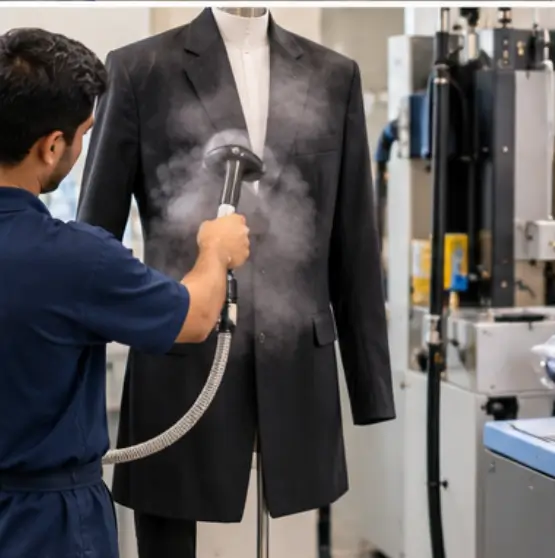
Step 5: Pressing and finishing. The garment is steam pressed. Creases come back sharp, and suit lapels lie flat again. Small fixes, like a loose button, are usually handled here too. Then the clothes are packed and sent back to you. If you only need pressing, you can book steam ironing on its own.
Types of Dry Cleaning
Not every dry cleaner uses the same solvent. The solvent changes how gentle the cleaning is and how it affects the environment. These are the main types you’ll come across.
Perc (perchloroethylene). This is the oldest and most common solvent. It’s very good at removing grease. But it raises environmental and health concerns, so many countries now control its use.
Hydrocarbons. This is a petroleum-based solvent. It’s gentler than perc and widely used today. It works well for everyday garments, though it can be slower on heavy grease.
Liquid CO2. This method uses pressurised carbon dioxide instead of a chemical solvent. It’s very gentle on fabric and kinder to the environment. It’s less common because the machines are expensive.
Siloxane (silicone-based). This is a clear, odour-free solvent that’s gentle on colours and delicate fabrics. Many cleaners offer it as a “green” option.
Professional wet cleaning. This isn’t dry cleaning in the strict sense. It uses water, but with specialist machines, controlled temperature and mild detergents. It suits some garments marked “dry clean only”, but only when trained hands do it.
So which one is best? It depends on the fabric, the stain and the care label. If you’d like a deeper comparison, read our guide on types of dry cleaning methods and when to use them.
Which Clothes Need Dry Cleaning?
Always check the care label first. A plain circle means dry clean. A circle with a cross through it means don’t dry clean. A letter inside the circle, like P or F, tells the cleaner which solvents are safe to use.
Beyond the label, these clothes usually need dry cleaning:
- Suits, blazers and structured jackets. The lining and padding can warp in water, and the fit rarely comes back.
- Silk. Silk sarees, blouses and dresses can show water marks and shrink unevenly, even when you hand wash them carefully.
- Wool and cashmere. The fibres can mat together, a problem called felting. Once it happens, it can’t be reversed.
- Embroidered and embellished wear. Zari sarees, lehengas, sherwanis, and anything with beads or sequins need gentle, professional handling.
- Wedding wear and gowns. These have delicate details that machine washing can easily damage.
- Winter coats and heavy outerwear. Tailored coats lose their shape in water. Bulky items like blankets also don’t fit well in most home machines.
- Heavily oil-stained clothes. Cooking oil, makeup and grease stains often survive repeated washes. A solvent breaks them down much better.
Here’s a simple rule. If a garment has lining, padding, beads or delicate fabric, play it safe and dry clean it.
Don’t overdo it, though. Suits and wool wear usually need cleaning every few wears, or when they look dirty or smell. Cleaning too often can wear the fabric down.
Dry Cleaning vs Home Washing
Not every piece of clothing needs dry cleaning. Here’s a quick way to decide.
| Dry Cleaning | Home Washing or Wash and Iron | |
| Best for | Silk, wool, suits, embellished wear | Cotton, polyester, jeans, activewear |
| Uses water | No | Yes |
| Oil and grease stains | Handles them well | Often leaves marks behind |
| Shape and structure | Protects tailored clothes | Can warp structured pieces |
| Finish | Steam pressed | Depends on ironing |
Everyday clothes like T-shirts, jeans and bedsheets don’t need dry cleaning. A regular wash and iron service costs less and does the job well.
Conclusion
Dry cleaning isn’t just for expensive clothes. It’s the safest way to clean fabrics that water can damage, like silk, wool, cashmere and tailored suits, and it handles oil stains that regular washing often leaves behind. The right type depends on your fabric, the stain and the care label, so always check the label before you decide.
For everyday cotton and polyester, a regular wash is enough. For everything delicate, dry cleaning protects the fit, color and finish for years. If you’d like to book it without the trip, Easy Spin connects you with verified local partners for dry cleaning with doorstep pickup and delivery across our available locations.