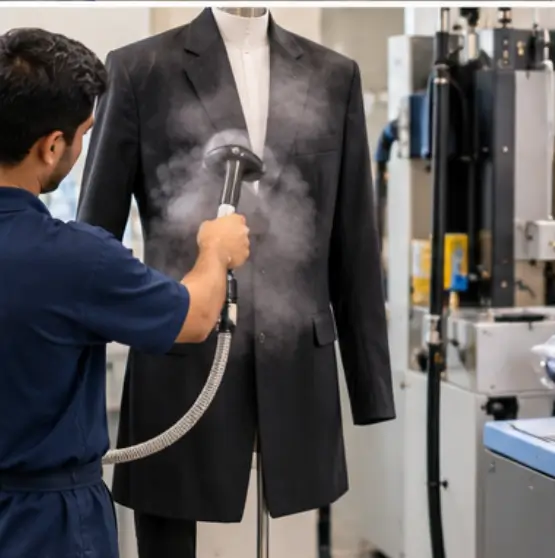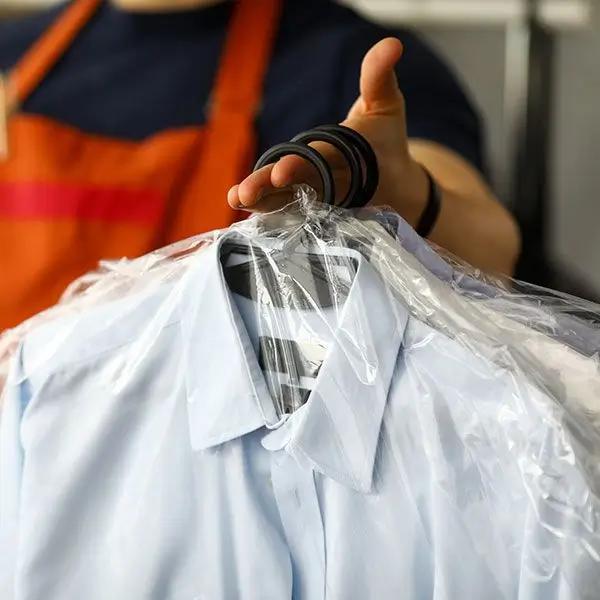

You’ve probably seen “eco-friendly” on a dry cleaner’s board lately. But what does it really mean? Green dry cleaning is a way of cleaning clothes without PERC, the harsh solvent used in traditional dry cleaning. It uses gentler methods like professional wet cleaning or liquid CO2 to lift dirt with less harm to people, fabric and the environment.
What Is Green Dry Cleaning?
Green dry cleaning means cleaning without PERC, using safer solvents or water-based methods. You’ll also hear “eco-friendly dry cleaning” or “organic dry cleaning,” but these labels aren’t regulated. A cleaner can be PERC-free and still not be very green.
For the basics of the standard process, see What is dry cleaning post.
Why Traditional Dry Cleaning Is Under Scrutiny
PERC (perchloroethylene) has been the go-to solvent for decades. In December 2024, the US EPA finalized a rule to phase it out of dry cleaning over 10 years, to protect workers and people living nearby. The International Agency for Research on Cancer also lists PERC as “probably carcinogenic to humans.”
Rules differ by country, so it’s smart to ask your cleaner what they use. That’s why PERC-free dry cleaning is now a big talking point.
Types of Green Dry Cleaning
Professional wet cleaning. Not the same as home washing. Computer-controlled machines manage water, heat and movement. In the wet cleaning vs dry cleaning debate, the big difference is no chemical solvent. It needs a skilled operator.
Liquid CO2. Liquid CO2 dry cleaning uses pressurized carbon dioxide, which is gentle and usually recycled. The machines are costly, so it’s rare in many Indian cities.
Silicone-based (D5/GreenEarth). Soft on fabric and low in odour. It’s better than PERC, though its long-term environmental impact is still debated.
Plant-based solvents. Can be a good option, but the term is vague. Ask for the product name.
A note on hydrocarbons. Often marketed as green, but it’s petroleum-based. It’s an improvement on PERC, not a truly eco-friendly choice.
Benefits of Green Dry Cleaning
Results depend on the method and the cleaner, but here’s what you can expect:
- Health: Fewer harsh fumes for workers and customers.
- Environment: Less toxic waste and lower risk to soil and water.
- Fabric care: Lower heat and milder agents help colours and fibres last.
- Odour-free results: No lingering chemical smell.
- Kids and sensitive skin: Less solvent residue can feel more comfortable, though no method is allergy-proof.
Green vs Traditional Dry Cleaning: Comparison Table
| Method | Solvent | Eco impact | Best fabrics | Typical cost |
| Traditional | PERC | High concern | Most fabrics | Lower |
| Wet cleaning | Water, mild detergent | Low | Wool, silk, cotton | Moderate |
| Liquid CO2 | Pressurized CO2 | Low | Delicates, embellished | Higher |
| Silicone-based | Liquid silicone | Low to moderate | Wool, silk | Moderate |
Costs are relative and vary by city and provider.
Which Fabrics Suit Green Cleaning?
Always check the care label first. Then think about the garment:
- Silk sarees: Wet cleaning or liquid CO2 often work. Ask for a spot test, since zari and dyes can bleed.
- Wool and cashmere: Wet cleaning works well, but only with an experienced operator.
- Sherwanis and lehengas: Padding, beads and heavy embroidery usually suit liquid CO2 or gentle solvent methods better than water.
Is It Worth the Cost?
Often it costs a little more. For everyday shirts, you may not need it. For silks, woollens, festive wear or kids’ clothes, the gentler care can be worth it. Ask for a quote and the method before you decide.
How to Spot Greenwashing
- Vague words like “natural” or “eco” with no explanation.
- No method named.
- Hydrocarbons are sold as green.
- No proof, such as product details or a visible machine.
- “Chemical-free” claims. Water is a chemical too.
- A strong chemical smell on your clothes.
How to Choose a Green Dry Cleaner
Whether you’re searching for green dry cleaning near me or asking a local shop, ask:
- Which method will you use for my garment?
- Do you use PERC or hydrocarbons at all?
- What is the solvent’s name, and can I see its safety data sheet?
- Will you do a spot test on delicates?
Clear answers are a good sign. Vague ones aren’t.
Easy Spin is a marketplace that connects you with verified local service partners for doorstep pickup and delivery. Methods vary by partner, so ask when you book. See our dry cleaning service page.
Conclusion
Green dry cleaning means moving away from PERC toward gentler methods. Wet cleaning and liquid CO2 are the strongest choices. Ask questions, check the method, and match it to your garment. Ready to book your service? Download the Easy Spin app now.
FAQ's
1. Is green dry cleaning really eco-friendly?
It depends on the method. Wet cleaning and liquid CO2 are the most reliable options. Others, like hydrocarbons, are better than PERC but still have environmental concerns. Ask which method is used.
2. What is the difference between green dry cleaning and regular dry cleaning?
Regular dry cleaning usually relies on PERC. Green dry cleaning avoids it and uses gentler options like water-based cleaning, liquid CO2 or silicone solvents, aiming for less harm to workers, clothes and the environment.
3. Is green dry cleaning safe for silk and woollens?
Often, yes. Wet cleaning and liquid CO2 are commonly used on both. Results depend on the cleaner’s skill, so ask for a spot test, especially for zari work and dark dyes.
4. Does green dry cleaning remove stains as well as traditional methods?
For most everyday stains, yes. Very heavy grease can be tougher for some methods. A good cleaner will pre-treat stains and tell you honestly what’s possible.
5. Is green dry cleaning more expensive?
Usually a little. Specialised machines and trained staff cost more, and liquid CO2 is typically the priciest. Always get a quote first.
6. How do I know if a dry cleaner is truly green?
Ask for the method and the solvent’s name. Be cautious of vague words like “natural” or “organic,” and of hydrocarbons sold as eco-friendly.