You flip over a silk kurta’s tag and spot a circle with a letter inside. Is it asking for wet cleaning or dry cleaning?
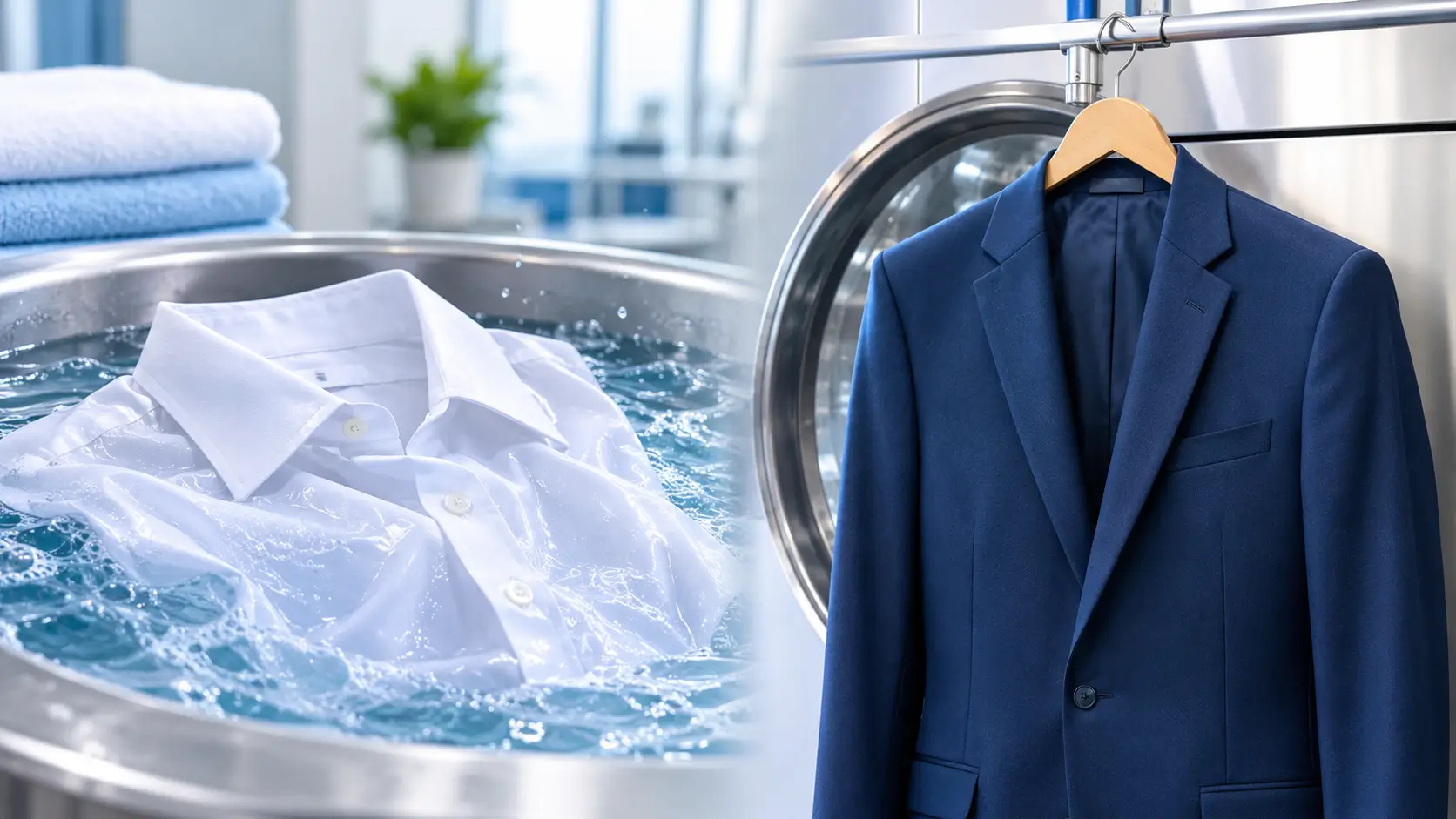
Wet cleaning uses water, mild detergent and controlled machines. Dry cleaning uses a chemical solvent instead of water. Choose wet cleaning whenever it was wet cleaning vs dry cleaning for many delicates and daily wear, and dry cleaning for structured, embellished or water-sensitive pieces. Your care label decides.
What Is Wet Cleaning?
Wet cleaning is a professional process, not a bigger version of home washing. Technicians set temperature, drum movement and spin speed for each fabric, then dry it gently. This controlled wet cleaning method is safe for many silks, wools and rayons that labels often mark “dry clean only.”
What Is Dry Cleaning?
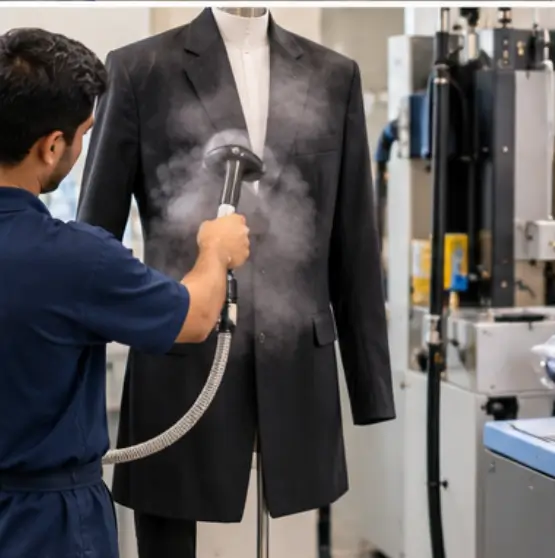
Despite the name, dry cleaning isn’t dry. Garments are cleaned in a liquid solvent instead of water. Common solvents are perc, hydrocarbon, liquid CO2 and siloxane. They dissolve oil and grease well and rarely shrink fabric. Learn more in our guide on what is dry cleaning.
Wet Cleaning vs Dry Cleaning: Comparison Table
Here’s dry cleaning vs wet cleaning at a glance.
| Factor | Wet cleaning | Dry cleaning |
| Cleaning medium | Water and mild detergent | Chemical solvent |
| Sweat and juice stains | Very effective | Often needs pre-treatment |
| Oil and grease | Good | Excellent |
| Delicates (silk, wool) | Often safe | Safe |
| Structured garments | Risky | Preferred |
| Embellishments | Risky | Safer |
| Shrinkage risk | Low when controlled | Very low |
| Odour after cleaning | Fresh | Faint, fades with airing |
| Environmental impact | Water use | Depends on solvent |
| Care label symbol | W in a circle | P or F in a circle |
How Each Process Works
Wet cleaning
- Inspect and tag the garment
- Pre-treat stains
- Wash on a fabric-specific program
- Rinse and gently spin
- Dry and press
Dry cleaning
- Inspect and tag the garment
- Spot-treat stains
- Clean in a solvent drum
- Extract and dry off the solvent
- Press and finish
See the full wet cleaning process breakdown.
How to Read Your Care Label
The dry clean only meaning is narrower than it sounds. It means the maker tested only that route. Here’s what the symbols say.
| Symbol | Meaning |
| Empty circle | Dry cleaning allowed |
| Circle with P | Dry cleaning with standard solvents |
| Circle with F | Hydrocarbon-type solvents only |
| Circle with W | Professional wet cleaning allowed |
| Crossed circle | Do not dry clean |
A professional wet clean can still work for some “dry clean only” pieces, so ask first.
Which Clothes Suit Wet Cleaning or Dry Cleaning?
Not sure which clothes need dry cleaning? Start here.
| Garment | Better choice | Why |
| Cotton kurtas, daily wear | Wet cleaning | Handles sweat well |
| Silk sarees | Dry cleaning | Protects colour and zari |
| Sherwanis, bandhgalas | Dry cleaning | Holds structure and padding |
| Heavy lehengas | Dry cleaning | Protects embellishments |
| Woollens, shawls | Either | Wet cleaning keeps wool soft |
| Blazers, suits | Dry cleaning | Keeps shape |
| Linen, rayon shirts | Wet cleaning | Gentle and fresh |
Pros and Cons of Each Method
Wet cleaning
- Pros: gentle on delicates, strong on sweat, no solvent smell
- Cons: unsuitable for structured or embellished pieces
Dry cleaning
- Pros: holds shape, lifts grease, protects trims
- Cons: weaker on sweat, solvent concerns
Wet Cleaning vs Washing at Home
This is the dry cleaning vs laundry question people skip. Same medium, different control. Home washing uses tap water, a guessed cycle and your detergent. Wet cleaning matches every setting to the fabric. Our laundry vs home washing post compares them.
Which Is Better for the Environment?
It depends on the solvent. Wet cleaning avoids chemicals but uses water. Perc raises concerns, while liquid CO2 and hydrocarbons are gentler. See our green dry cleaning guide.
Cost and Turnaround
Price depends on fabric, embellishment, stain treatment, garment count and urgency. Turnaround varies with workload and drying time. Confirm both before handover. See our pricing and turnaround page.
How to Choose the Right Method
- Check the care label.
- Note the fabric and any embellishment.
- Identify the stain type.
- Ask the cleaner which method they’d use and why.
- Pick wet cleaning dry cleaners who offer both.
Easy Spin is a marketplace that connects you with verified local partners for wet cleaning and dry cleaning, with doorstep pickup and delivery.
Common Mistakes to Avoid
- Assuming “dry clean only” rules out wet cleaning without asking
- Washing embellished pieces at home
- Hiding stains from the cleaner
- Storing cleaned clothes in plastic bags
- Cleaning too often, which wears fabric
Conclusion
Both methods work when matched to the fabric. Read the label, ask questions and choose with confidence. Ready to book? Explore our dry cleaning service.
FAQs
Is wet cleaning better than dry cleaning?
Neither is better in every case. Wet cleaning works best for sweat, food stains and delicate fabrics like silk, wool and rayon. Dry cleaning works best for oil stains, structured garments and embellished pieces. The right choice depends on the fabric, the stain and what your care label allows.
Can I wet clean “dry clean only” clothes?
Sometimes, yes. A “dry clean only” label means the maker tested only that method. Many silk, wool and rayon pieces handle professional wet cleaning well. Avoid it for structured, padded or heavily embellished garments, and always ask a trained cleaner to inspect the item first.
Does dry cleaning use water?
No. Dry cleaning uses a liquid chemical solvent such as perc, hydrocarbon, liquid CO2 or siloxane instead of water. Steam is used only during pressing and finishing. This is why the process suits fabrics that can shrink, bleed or lose shape in water.
Is wet cleaning safe for sarees?
It depends on the saree. Plain cotton and many silk sarees can be wet cleaned safely by professionals. Sarees with zari, heavy embroidery, stones or delicate dyes need dry cleaning, because water can tarnish metallic thread and make colours bleed. When unsure, ask for a patch test.
Does wet cleaning shrink clothes?
Rarely, when it is done professionally. Wet cleaning machines control water temperature, drum movement, spin speed and drying heat for each fabric, which keeps shrinkage low. Home washing carries more risk, because hot water, rough cycles and high heat are easy to get wrong.
Is wet cleaning eco-friendlier?
Often, but not always. Wet cleaning avoids chemical solvents and uses mild detergents, though it does use water and creates wastewater. Dry cleaning varies by solvent. Perc raises more concerns, while liquid CO2 and hydrocarbon are gentler. Ask your cleaner which process they use.
What does the W symbol mean?
Professional wet cleaning is allowed for that garment.
Which removes sweat better?
Wet cleaning, because sweat is water-based.
How often should I dry clean?
Only when needed, such as visible stains or after several wears. Over-cleaning wears fabric.