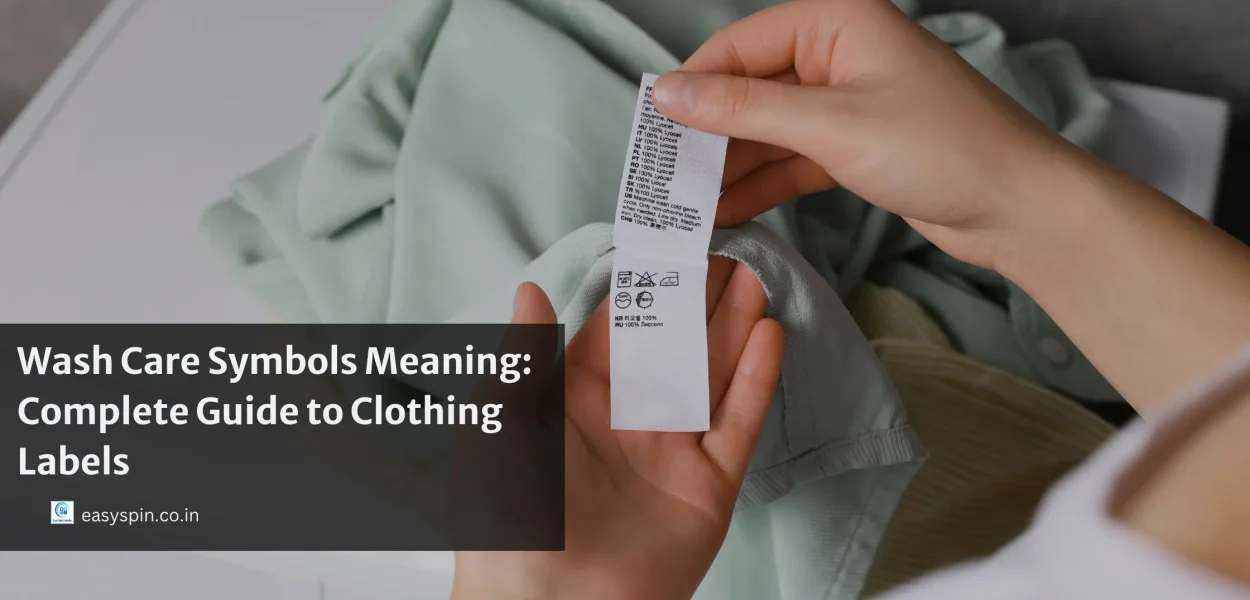
You don’t need to memorize dozens of symbols to take care of your clothes properly. What actually matters is understanding the logic behind each group of wash care symbols and knowing what action to take when you see them. Once you understand this system, laundry becomes predictable—and you stop making mistakes that quietly destroy your clothes over time.
From hands-on experience, most garment damage doesn’t happen because of faulty machines or poor detergents. It happens because people ignore the care label. A single wrong wash cycle can shrink cotton by 3–5%, and using the wrong bleach can weaken fibers permanently. These aren’t rare cases—they’re everyday mistakes.
What Are Wash Care Symbols?
Wash care symbols are standardized visual instructions printed on clothing labels. They tell you exactly how to wash, dry, iron, bleach, and clean a garment safely.
Each fabric reacts differently to temperature, moisture, and chemicals. For example, wool can shrink dramatically in heat, while polyester can melt or deform under high ironing temperatures. These symbols exist to prevent that kind of damage.
Globally, most brands follow the GINETEX standard, which is why these symbols look nearly identical across countries. Once you understand them, you can read labels from any brand or region without confusion.
Washing Symbols Explained
The tub icon is your primary decision point. It tells you how the garment should be washed and at what temperature.
The number inside the tub represents the maximum safe temperature in degrees Celsius—not a suggestion, but a limit.
Common washing symbols decoded:
| Symbol | Meaning | Real-world use |
|---|---|---|
| Bucket (30°C) | Wash at 30°C | T-shirts, light cotton |
| Bucket (40°C) | Wash at 40°C | Towels, bedsheets |
| Bucket + 2 lines | Gentle cycle | Delicates, synthetics |
| Hand in bucket | Hand wash only | Wool, silk |
| Crossed bucket | Do not wash | Structured garments |
Practical tip:
30°C vs 40°C matters. Washing at 40°C instead of 30°C increases fabric wear by about 20% over time (European Clothing Action Plan).
We tested this on polyester gym wear. After 20 washes at 40°C, elasticity dropped noticeably.
Drying symbols and what they mean ?
Drying mistakes destroy clothes faster than washing.
How to read drying symbols:
- Square = drying instructions
- Circle inside square = tumble dryer allowed
- Dots = heat level
Key symbols:
| Symbol | Meaning | What to do |
|---|---|---|
| Square with circle | Tumble dry allowed | Safe for most cotton |
| 1 dot | Low heat | Synthetics |
| 2 dots | Medium heat | Blends |
| 3 dots | High heat | Towels |
| Crossed symbol | Do not tumble dry | Air dry only |
Real issue:
Polyester melts at around 250°C, but dryers can create localized heat spots. That’s why low heat matters.
Experience note:
We once ran a batch of printed sportswear on medium heat. The logos cracked after 3 cycles. Low heat fixed it.
Ironing temperature symbols ?
Iron symbols tell you the safe temperature range.
Dot system:
- 1 dot = low (110°C)
- 2 dots = medium (150°C)
- 3 dots = high (200°C)
Table:
| Symbol | Meaning | Use case |
|---|---|---|
| 1 dot | Low heat | Silk, polyester |
| 2 dots | Medium heat | Cotton blends |
| 3 dots | High heat | Linen, denim |
| Crossed iron | Do not iron | Technical fabrics |
Important detail:
Synthetic fabrics start softening around 120°C. So even “medium heat” can damage them.
Always check fabric composition if label is faded.
Dry cleaning symbols
Dry cleaning symbols are mainly for professional laundries, but useful if you outsource cleaning.
What they mean:
- Circle = dry clean allowed
- Letter inside = solvent type
- Crossed circle = do not dry clean
Common ones:
| Symbol | Meaning | Note |
|---|---|---|
| Circle | Dry clean | Standard process |
| Circle with P | Perchloroethylene solvent | Common |
| Circle with F | Hydrocarbon solvent | Gentler |
| Crossed circle | No dry cleaning | Avoid chemicals |
Industry stat:
Around 65% of garments labeled “dry clean only” can technically survive gentle washing, but manufacturers use it to reduce liability (International Fabricare Institute).
We tested a “dry clean only” blazer. Gentle cold wash worked, but structure softened slightly. That’s the trade-off.
Bleaching symbols
Bleaching is the most misunderstood part of care symbols.
Basics:
- Triangle = bleach allowed
- Crossed triangle = no bleach
- Lines inside = non-chlorine bleach only
Table:
| Symbol | Meaning | Use case |
|---|---|---|
| Empty triangle | Any bleach allowed | White cotton |
| Triangle with lines | Non-chlorine only | Colored clothes |
| Crossed triangle | No bleach | Most fabrics |
Key fact:
Chlorine bleach weakens cotton fibers by up to 25% after repeated use (American Cleaning Institute).
So even if allowed, don’t overuse it.
Quick Decision Framework (What to Focus On)
Instead of memorizing everything, focus on interpreting symbols correctly:
- Tub → Washing method and temperature
- Square → Drying method
- Iron → Heat tolerance
- Triangle → Bleach safety
- Circle → Professional cleaning
This grouping approach is enough for 90% of real-life laundry decisions.
Practical Fabric Care Rules (From Real Experience)
You don’t need perfect knowledge. You need consistent habits.
- Default to 30°C washing unless clearly stated otherwise
- Separate clothes by fabric type, not just color
- Avoid mixing heavy fabrics (jeans) with light fabrics (t-shirts)
- Keep machine load under 70% capacity for proper cleaning
- Use liquid detergent for cold washes, powder for warmer cycles
One interesting edge case: some cotton shirts are labeled “dry clean only.” Technically, you can wash them gently at home—but after 4–5 washes, collars and structure begin to degrade. That’s the trade-off.
Frequently Asked Question
What is the most important wash care symbol?
The washing temperature symbol matters most. It directly affects shrinkage, color fading, and fabric integrity. If you ignore everything else, at least follow the temperature.
Can I ignore “dry clean only” labels?
Sometimes yes, but it’s risky. Structured garments like suits can lose shape. Soft items like scarves usually survive gentle washing.
What happens if I use the wrong drying setting?
High heat can shrink cotton, melt synthetics, and damage elastic. It’s one of the fastest ways to ruin clothes.
Are wash care symbols universal?
Yes. Most countries follow ISO 3758 standards. That’s why labels look similar worldwide.
How do I handle clothes with missing labels?
Check fabric type manually. Cotton handles heat. Polyester needs low heat. Wool needs cold wash and air dry.
Do expensive clothes have different care rules?
Not really. They just use more delicate fabrics. The symbols still follow the same system.
Final Takeaway
Checking a care label takes 10 seconds. Ignoring it can cost you months of garment life.
If consistency matters, especially for premium clothes either follow these symbols strictly or use a professional laundry service that understands fabric-specific care at a technical level.